Lesson 10 · Hiragana
わ を ん
The last three. None of them behaves quite like the forty-three before it.
わ is an ordinary kana in a row with three empty slots. を sounds exactly like お and is used almost solely as a piece of grammar. ん is not a syllable at all — it is a single consonant, the only one in the script, and it cannot start a word.
Scroll
Warm up
Forty-three so far, twice each.
わ — wa
-
わ
wa
A wasp flying straight up.
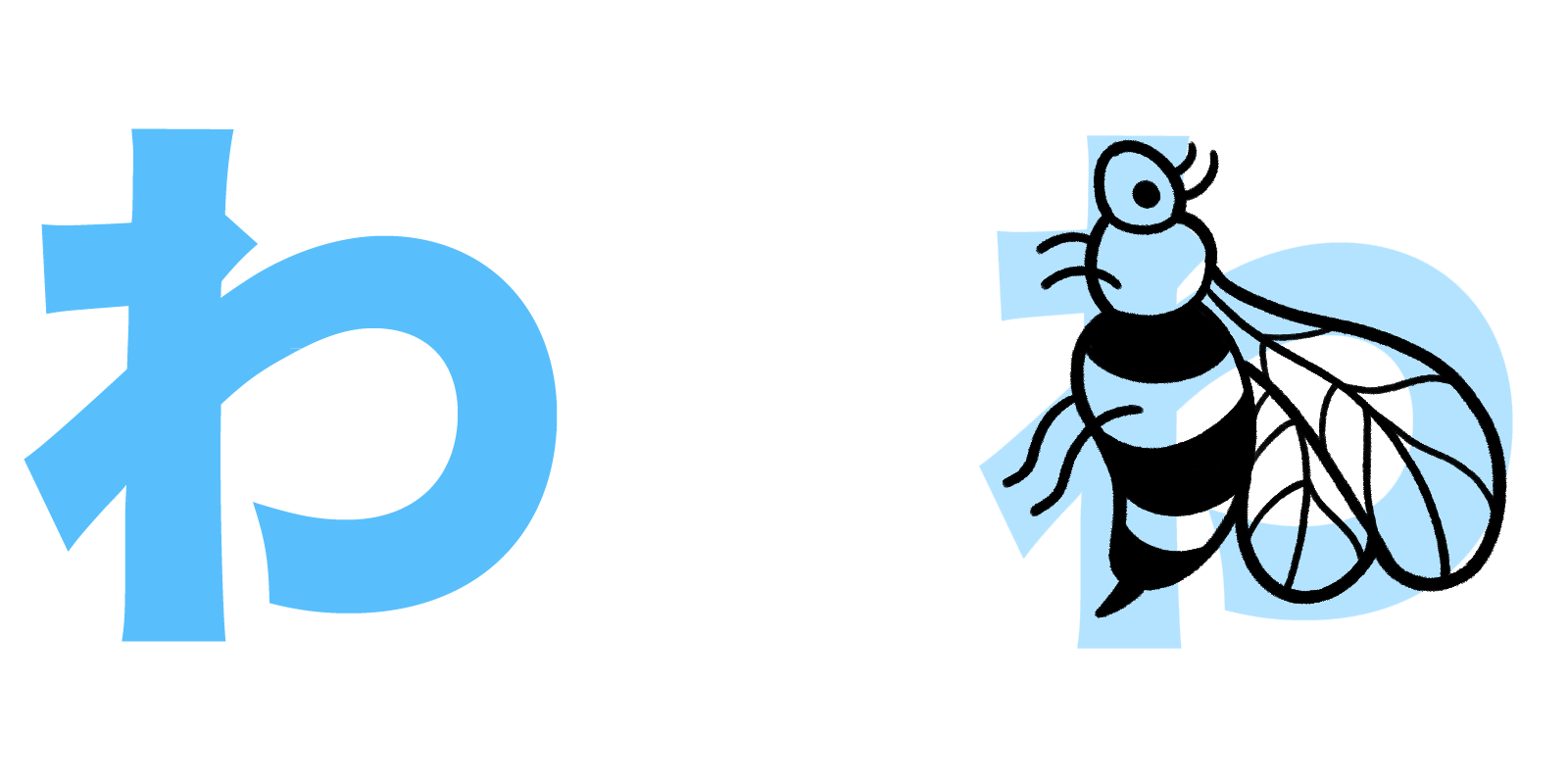
W before あ gives わ. Like the “wa” in wasabi. Third of the trio that shares an upright with ね and れ — this one’s tail just stops.
Three tails
ね, れ, わ. Same upright, three endings. Play it and pick.
Me
I, me. The everyday word for yourself, and the subject of most sentences you will build first.
を — wo
-
を
wo
Whoa! yells the man with no chin. Someone threw a boomerang into his mouth.
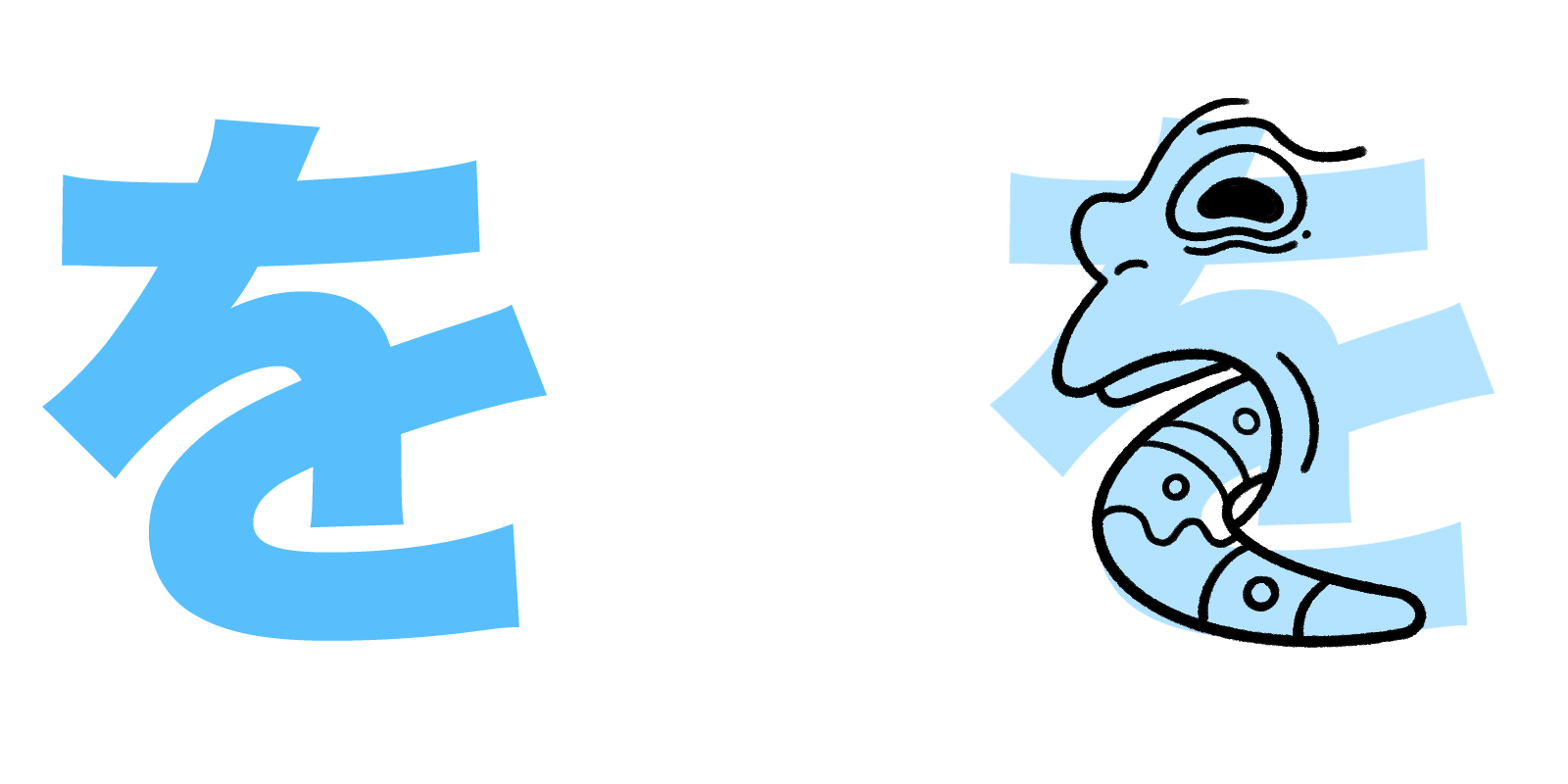
In romaji this is written o — the same as お, because it is the same sound.
Which raises the obvious question: if both are “o”, how do you know which one to write? By whether it stands alone. を is only ever a particle, and a particle is its own word — so a lone o between two words is always を, and an o inside a word is always お. Never the other way round.
Two places still say wo, and neither is romaji. A kana chart labels the cell wo because it sits in the w column, and wo is what you type on a keyboard to produce it. The W was pronounced once; the sound went and the slot stayed.
What を is for
It marks the thing a verb is done to. English uses word order for this; Japanese hangs a を off the noun instead, which is why it turns up between a thing and an action rather than inside a word.
Noun, を, verb — the first sentence shape you can read.
The same shape, six times
Six phrases, one pattern. Nothing here is new except that を keeps turning up in the same place — between the thing and what is done to it.
Either notation counts: yama o miru as romaji, or yamawomiru as you would type it on a keyboard. What will not do is running the words together with an o — that is neither, and it hides which character you meant.
ん — n
-
ん
n
It looks like a lowercase n, and it is the same sound. The one time the script gives you a freebie.
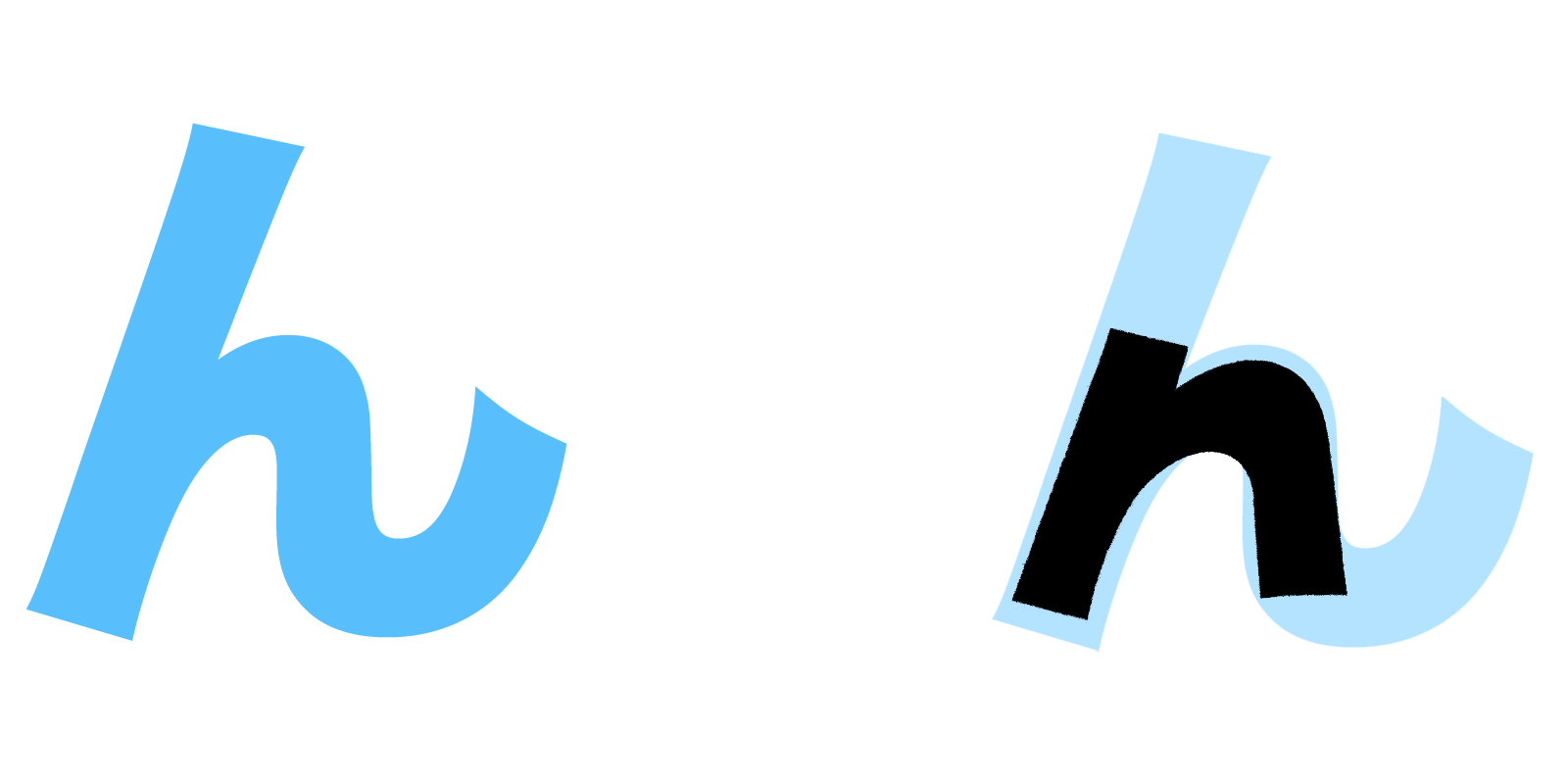
Not a syllable — a bare N, like the end of pen. It is the only kana that is one consonant on its own, and no word begins with it. The forty-sixth and last.
Japan
Japan — as the country calls itself. Three characters, and the last one is the character you just met.
The last three together
The shortest board in the course, and the final one.
Read them cold
All forty-six
Twice each. Every hiragana there is.
Words
Every one unique. Most of these were unreadable an hour ago.
Spell all of it
The phrases are in here too. A lone o is を; an o inside a word is お.
A whole sentence
Nine characters, no kanji, nothing you have not been taught. Read it out loud before you play it.
That is all of them
Forty-six characters. Every hiragana there is, in ten lessons — and the sentence on the last panel is the proof: you read a line of Japanese with no romaji, no transliteration and no help.
Two of the three you just learned are grammar as much as they are characters. を marks the object of a verb. は, which you have known since lesson 6, marks the topic of a sentence and is said “wa” when it does — that is the one sound change in the script, and you have now seen why it exists.
ん is worth one more note. Because it is a consonant on its own it counts as a full beat when spoken — にほん is three beats, not two and a half. That is also why no word starts with it: there is nothing for it to lean on.
What comes next
Not more shapes. Two strokes on the top right of a kana voice it — か becomes ga — and a small circle turns the は row into pa. That is another twenty-five sounds with no new characters to learn, and it is where lesson 11 goes. After that: the small つ, the combination sounds like kya and kyo, and then katakana.
Meanwhile the whole chart is readable, which means Bunpo’s kana lessons are now revision rather than instruction. Take the grammar there; bring anything that does not make sense back here.