Lesson 3 · Hiragana
さ し す せ そ
The s row — and the first character that breaks the pattern.
Four of these are the s you expect. し is not: it is shi, not si. That is the first of a handful of exceptions in the whole system, and it is worth meeting knowingly rather than being surprised by it.
Scroll
Warm up
Everything so far — the vowels and the k row.
さ — sa
-
さ
sa
Two hands stirring a bowl of salsa — thick enough to need both.
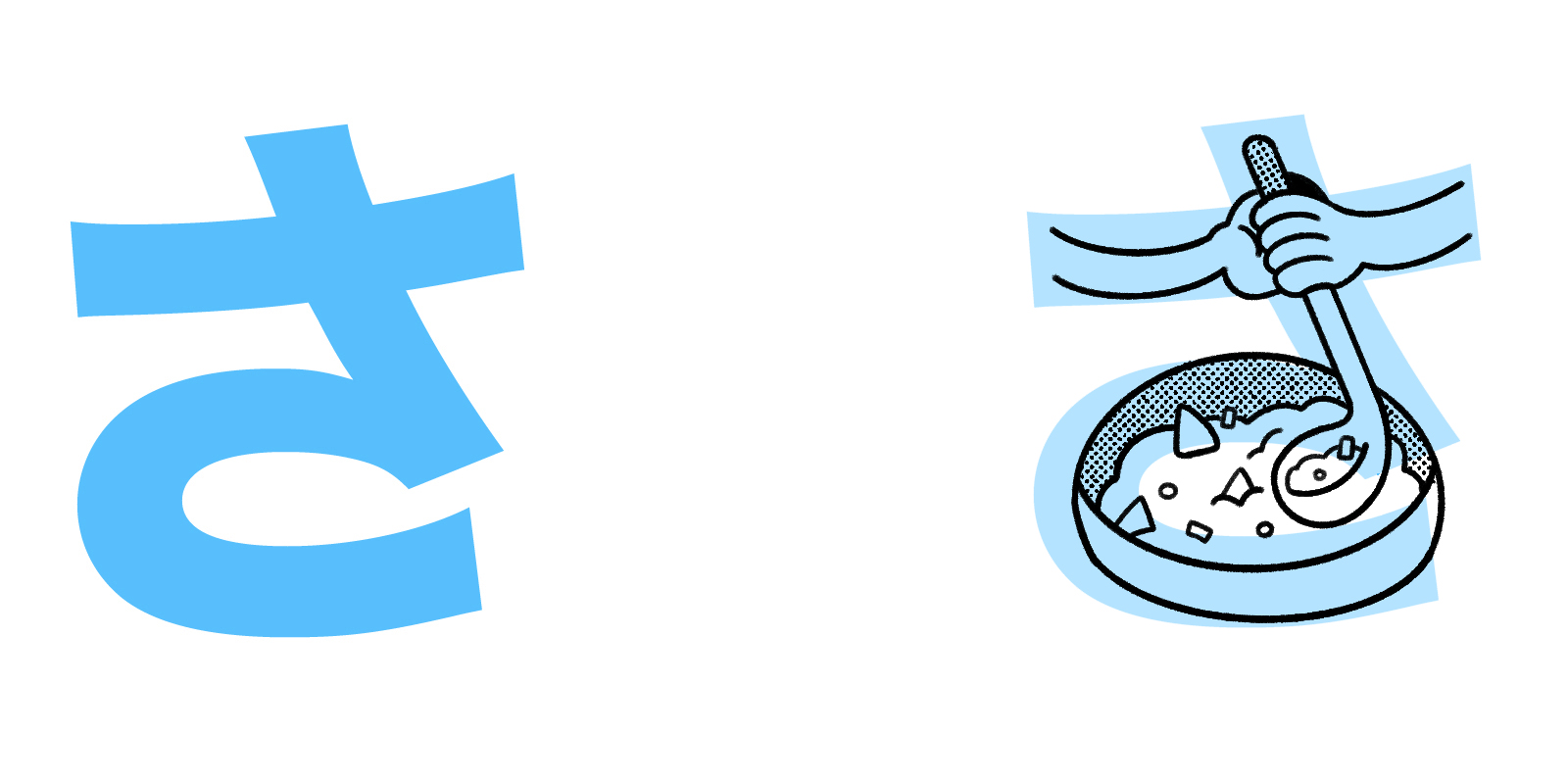
“sa”, as in salsa. One crossbar — hold on to that, because き has two.
き or さ
The pair you were warned about, on its own. Two crossbars is き; one is さ.
A word
Morning.
し — shi
-
し
shi
A giant shepherd’s crook, for herding sheep.

“shee”, as in sheep — not “see”. This is the exception in the row: s + i would give si, and Japanese does not have that sound.
Another word
Salt. On every table and every packet.
す — su
-
す
su
A swing doing a loop, throwing the kid off — he is going to sue.
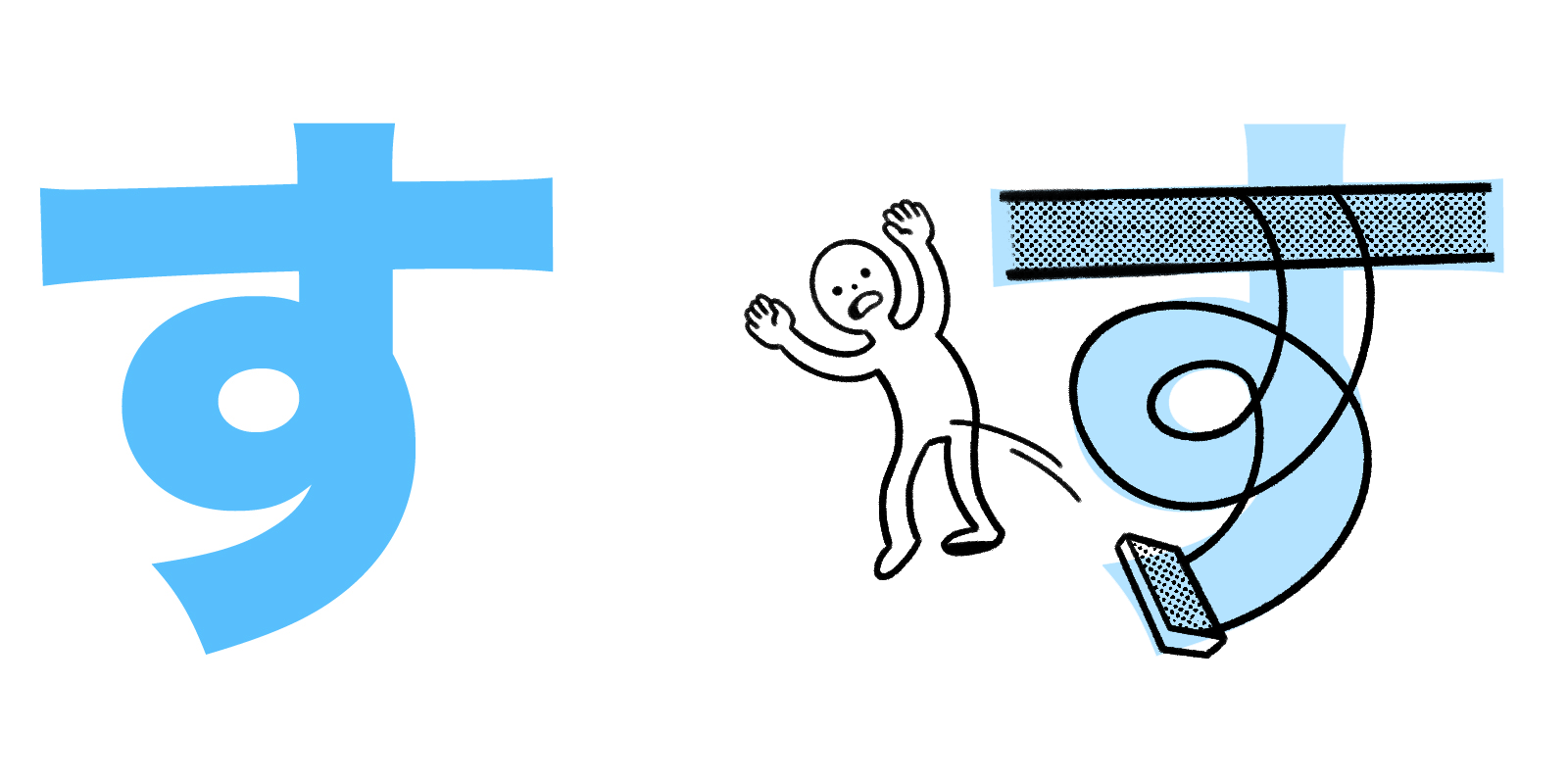
Like the word sue, or the “su” in suit. Often clipped so short in speech that the vowel almost disappears — です comes out closer to “dess”.
You can read this one
Sushi. A word you already knew, now one you can write.
せ — se
-
せ
se
A mouth with one big vampire fang — someone selling vampire teeth.
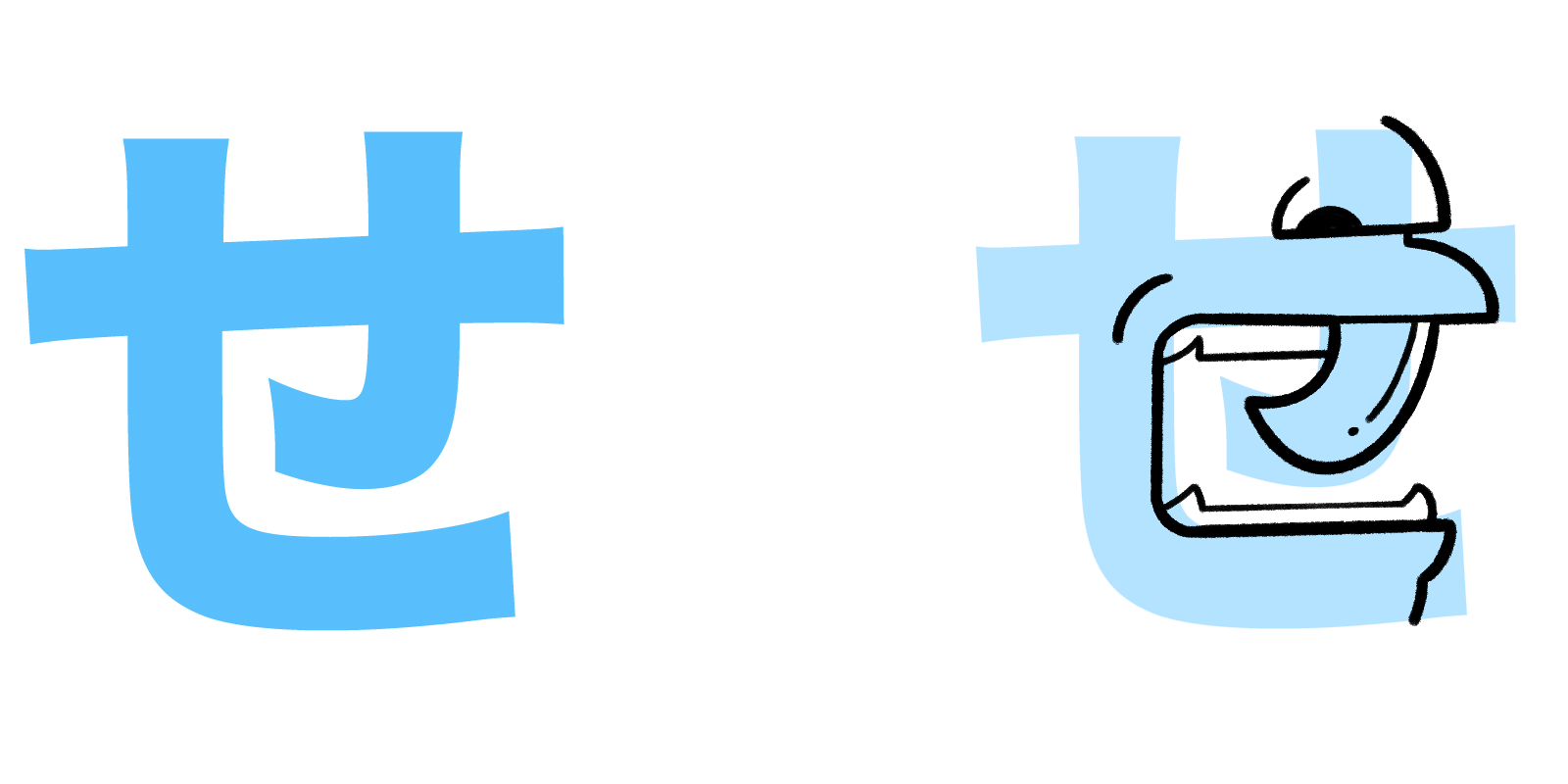
“se”, as in sell. The left upright is the same stroke you met in け.
A useful one
Seat. What the number on your train ticket refers to.
そ — so
-
そ
so
A mouth slurping soda.
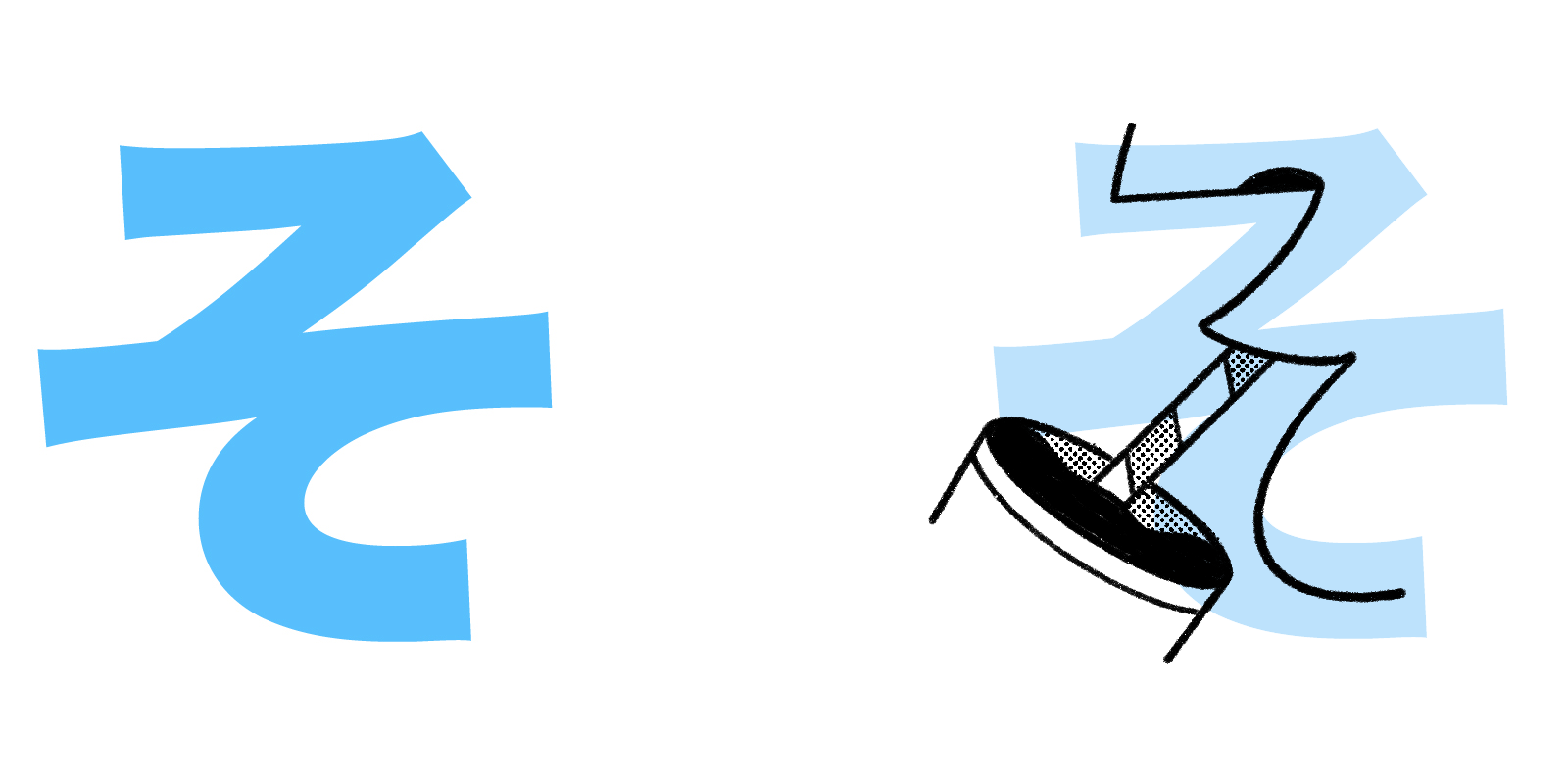
“so”, as in soda — or song, in British English. Last of the row: fifteen characters, a third of the way.
Over there
Over there.
The row together
Pair them up.
Read them cold
No options. Type what you see.
All fifteen
Everything you can read, mixed.
Words
Fifteen characters buys a lot of words.
Spell every word
Worth knowing
ここ, そこ, あそこ — here, there, over there. They are a set, and Japanese uses them constantly: pointing at a seat, a platform, a dish on a menu. Learning them as a trio is worth more than learning any one of them.
すこし — “a little” — is one of the most useful words in the language for a beginner. It softens anything. すこし and a gesture will get you a long way before you have any grammar.
And し being shi is not an oddity to resent — it is the first sign that the chart describes sounds Japanese actually has, rather than every combination the grid allows. You will meet the same thing at ち and つ next lesson.