Lesson 6 · Hiragana
は ひ ふ へ ほ
The last exception lives here — and two of these characters lead a double life as grammar.
ふ is fu, not hu: the fourth and final character that does not say what the grid predicts. And は and へ both change their sound when they are used as particles, which is the first place reading and grammar touch.
Scroll
Warm up
Twenty-five so far.
は — ha
-
は
ha
An uppercase H plus a lowercase a. What does that spell? Ha!
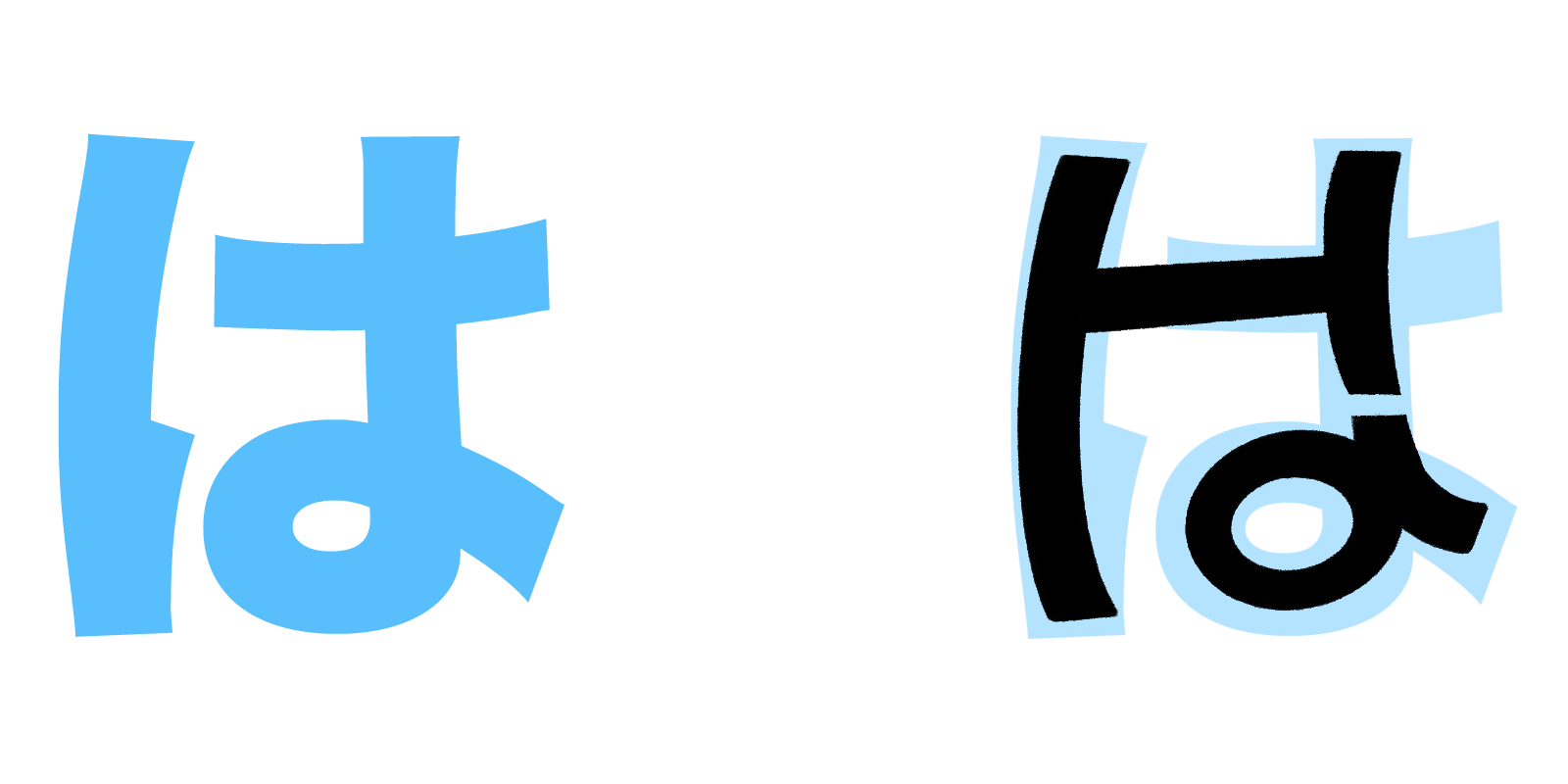
H before あ gives は. Like the “ha” in ha ha.
Chopsticks
Chopsticks. The same word also means bridge, with a different pitch.
ひ — hi
-
ひ
hi
He has a big nose. See the nose? Now say it out loud.
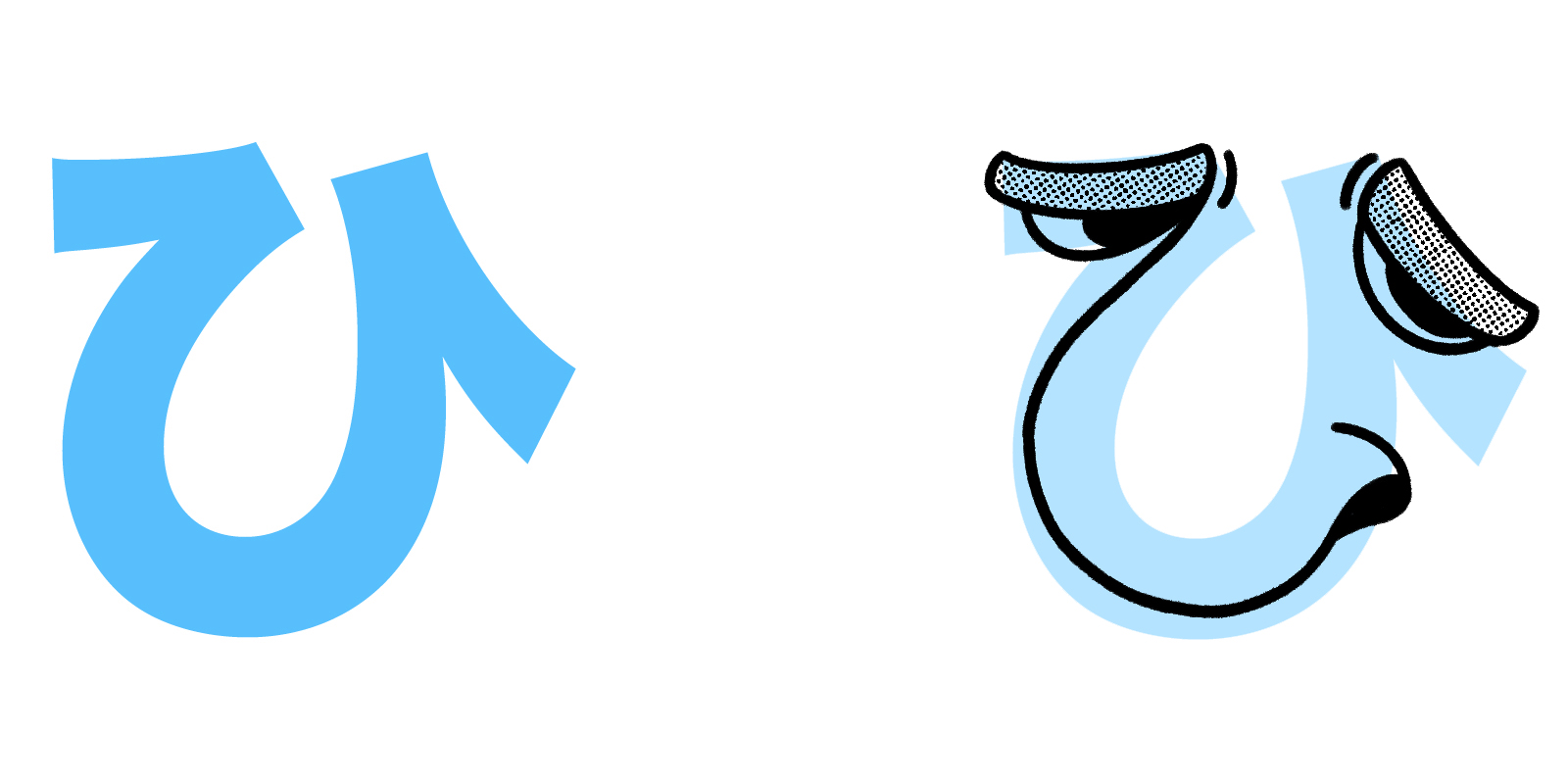
H before い gives ひ. Like the English pronoun he, or the “he” in heat.
Person
A person. One of the most common nouns in the language.
ふ — fu
-
ふ
fu
Someone dancing like a fool — and that thing around their neck is a hula hoop, which is why they are twisting so hard.
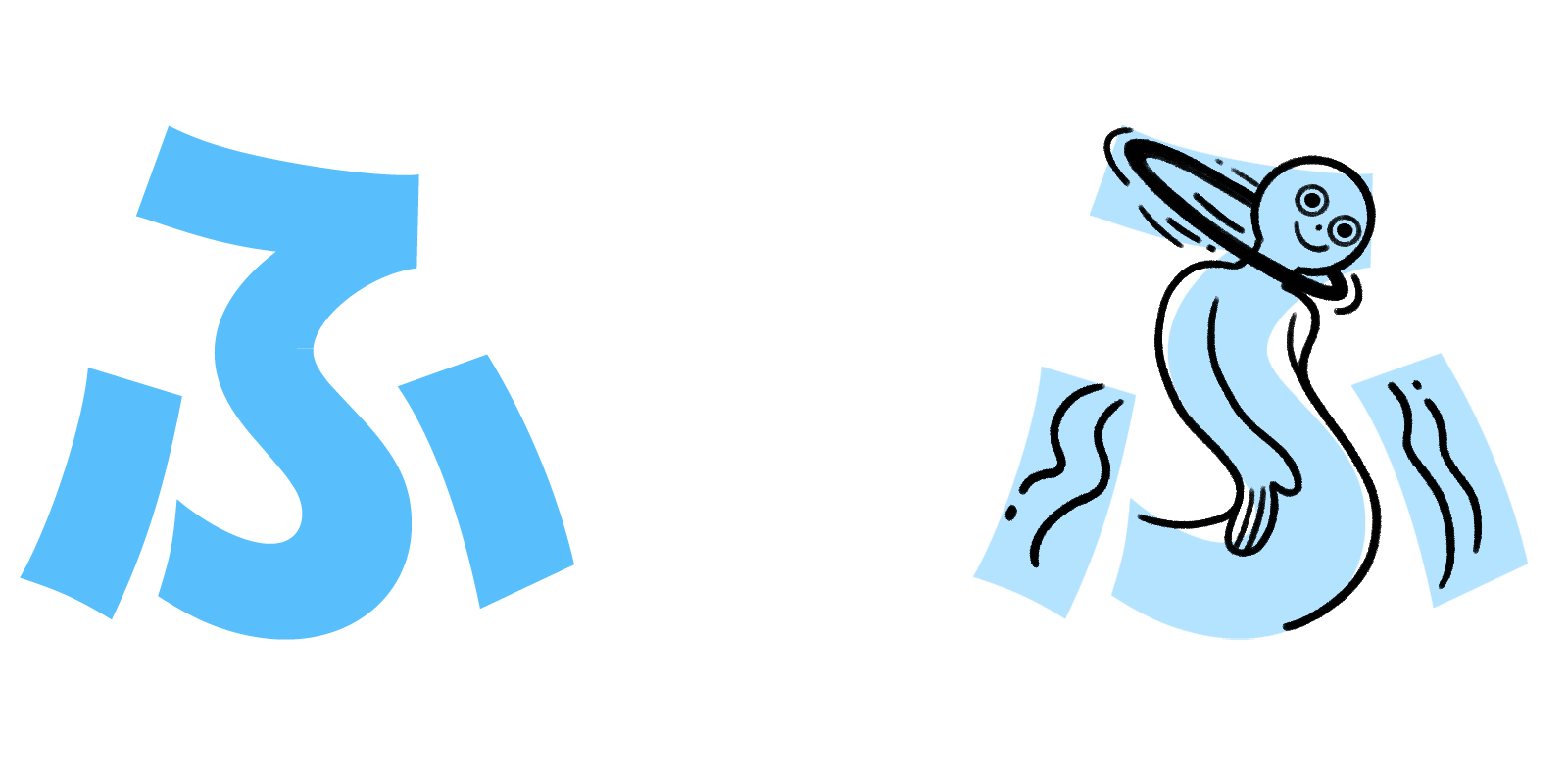
The last exception. The sound sits halfway between f and h — a softly blown foo, sometimes closer to hoo. Written fu, never hu.
Counting things
Two things. With one thing, you can order by pointing and counting.
へ — he
-
へ
he
Mount Saint Helens. Not totally flat, but pretty squat looking.

H before え gives へ. Like the “he” in help. The simplest shape in the whole syllabary — two strokes that barely bend.
Bad at it
Unskilled, bad at something. You will hear people say it about themselves constantly.
ほ — ho
-
ほ
ho
The line on the left is a chimney. On the right is a four-armed, headless Santa, uttering ho ho ho out of his neck.

H before お gives ほ. Like the “ho” in hoe — or hot, in British English.
は or ほ
One stroke apart, and the pair most likely to catch you out. ほ has the extra horizontal near the top; は does not.
Star
A star.
The row together
Pair them up.
Read them cold
No options.
All thirty
Two thirds of the syllabary.
Words
Thirty characters buys a great deal.
Spell every word
Worth knowing
は is said “wa” when it is a particle. As a character it is ha; as the marker that says what a sentence is about, the same shape is pronounced wa. So ねこは… is read “neko wa”, not “neko ha”. Nothing about the writing tells you — you learn it from position.
へ is said “e” when it is a particle too, marking direction: えきへ — “to the station” — reads “eki e”. Two characters, two double lives, and both are everywhere.
That is also the answer to a question you might have had since lesson one: hiragana is not quite a phonetic alphabet. It is very nearly one, with four exception characters and two particles that change their reading. That is the whole of the irregularity.
ひとつ, ふたつ — one thing, two things. Point at what you want, say the number, and you have ordered.