Lesson 7 · Hiragana
ま み む め も
No exceptions, no particles. Five characters that behave, and one that joins the look-alike family.
め is the third member of the ぬ / ね family, so there is a three-way pull to sort out here. Everything else in this row says exactly what the grid predicts.
Scroll
Warm up
Thirty so far, twice each.
ま — ma
-
ま
ma
Your mama, doing evil magic: her head removed, her hands and arms doubled.
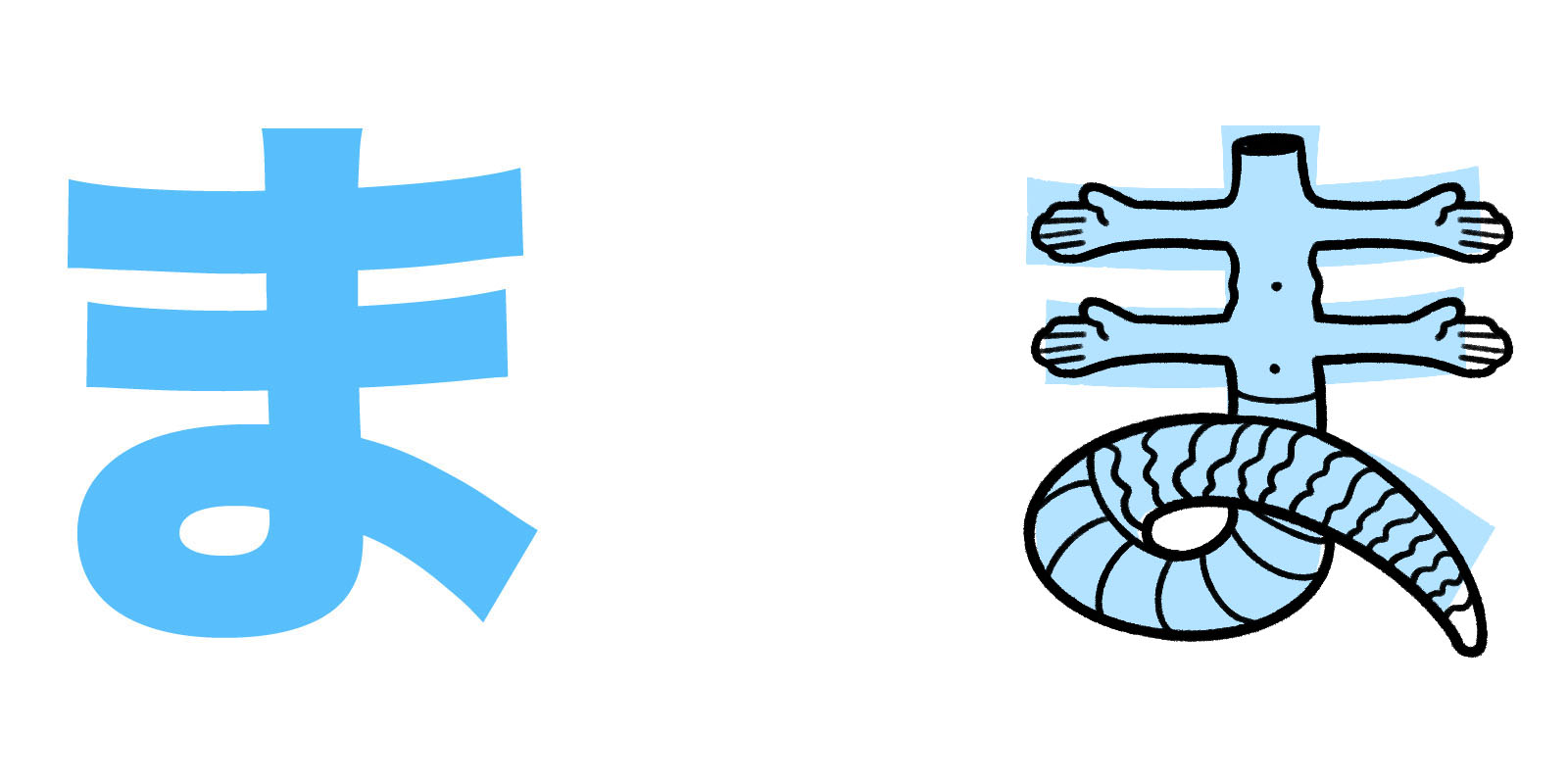
M before あ gives ま. Like the English word ma, or the “ma” in mark.
Your name
Name. The word in “what is your name?”, and the one you will be asked at every counter.
み — mi
-
み
mi
Lucky number 21. Who just hit blackjack? Me! Who just turned 21? Me!
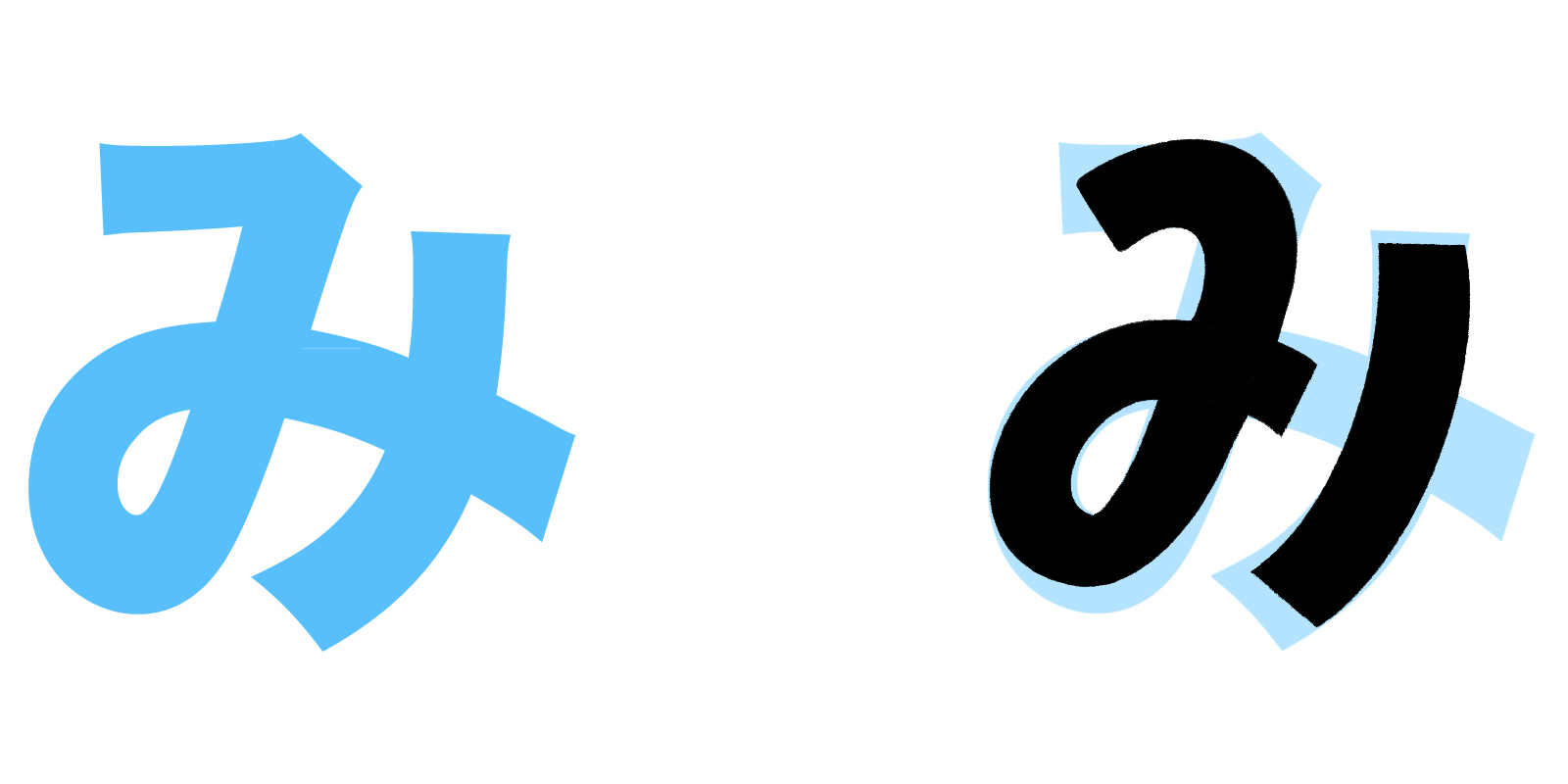
M before い gives み. Like the English word me.
Ears
Ear. The same character twice, which is its own small pleasure.
む — mu
-
む
mu
“Moooo”, says the cow. “MOOOOOOO.”
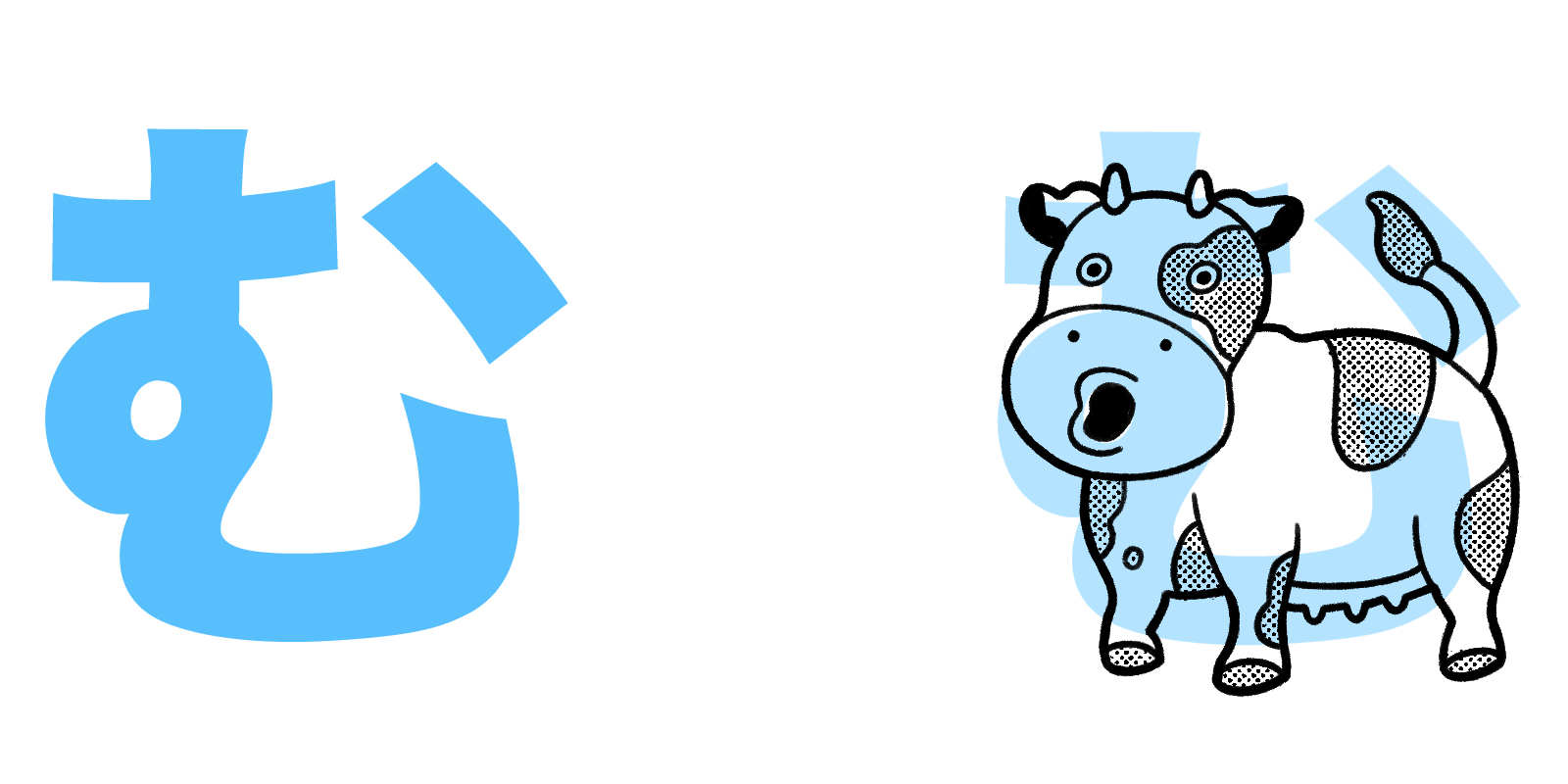
M before う gives む. Like what a cow says: moo.
Insect
Insect, bug.
め — me
-
め
me
A beautiful eye, beautiful because of the meakeup on it. Without it the whole ensemble is just “meh”.
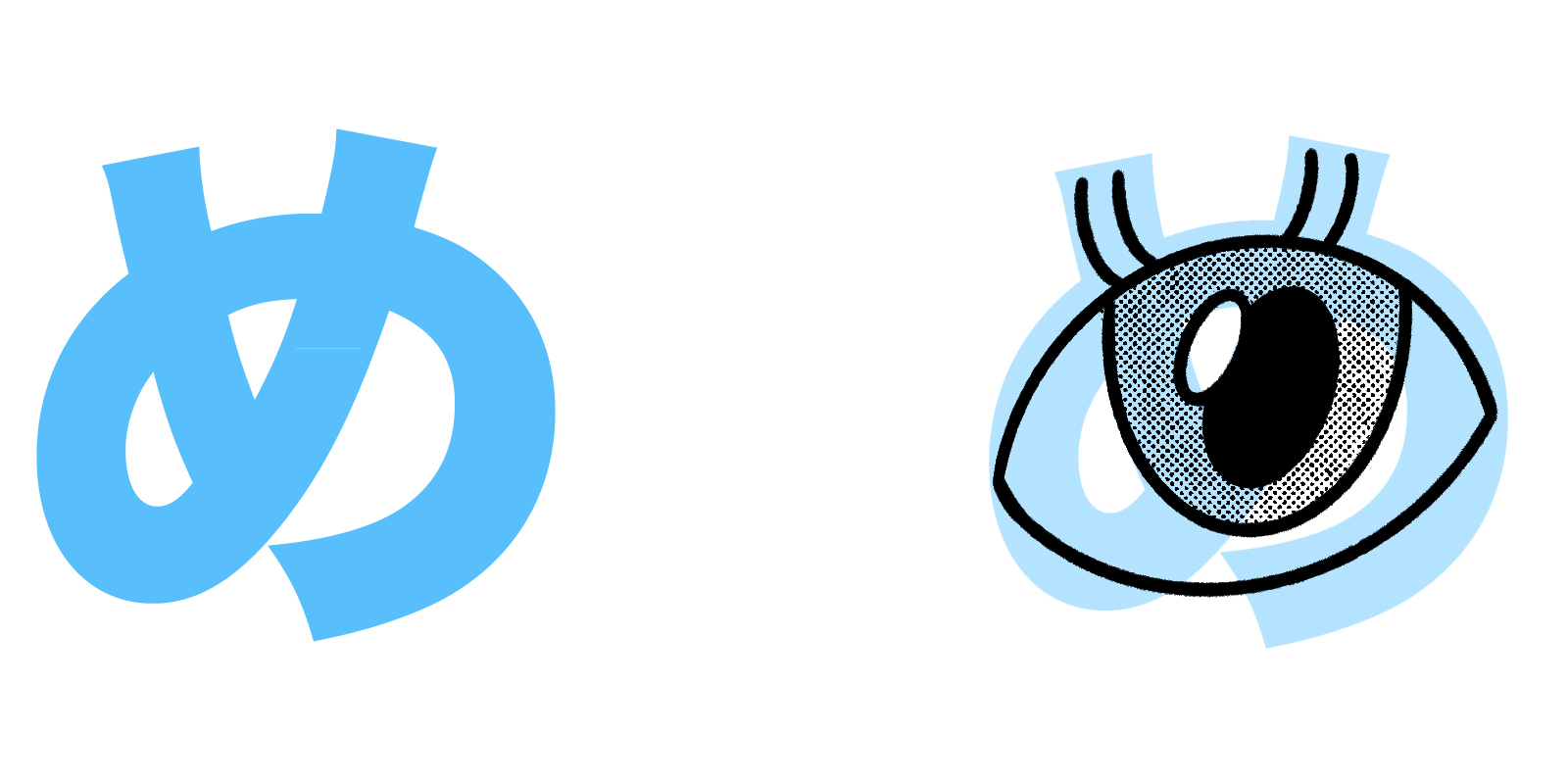
M before え gives め. Like the “me” in mess. And the mnemonic is doing double duty: め is also the word for eye.
ぬ, ね or め
The whole family at once. ぬ is all curve with a loop at the bottom; ね has corners on the left and a looped tail; め has the corners but no loop.
Rain
Rain. The same word also means candy, told apart by pitch.
も — mo
-
も
mo
You want to catch more, so you add more worms to your hook.
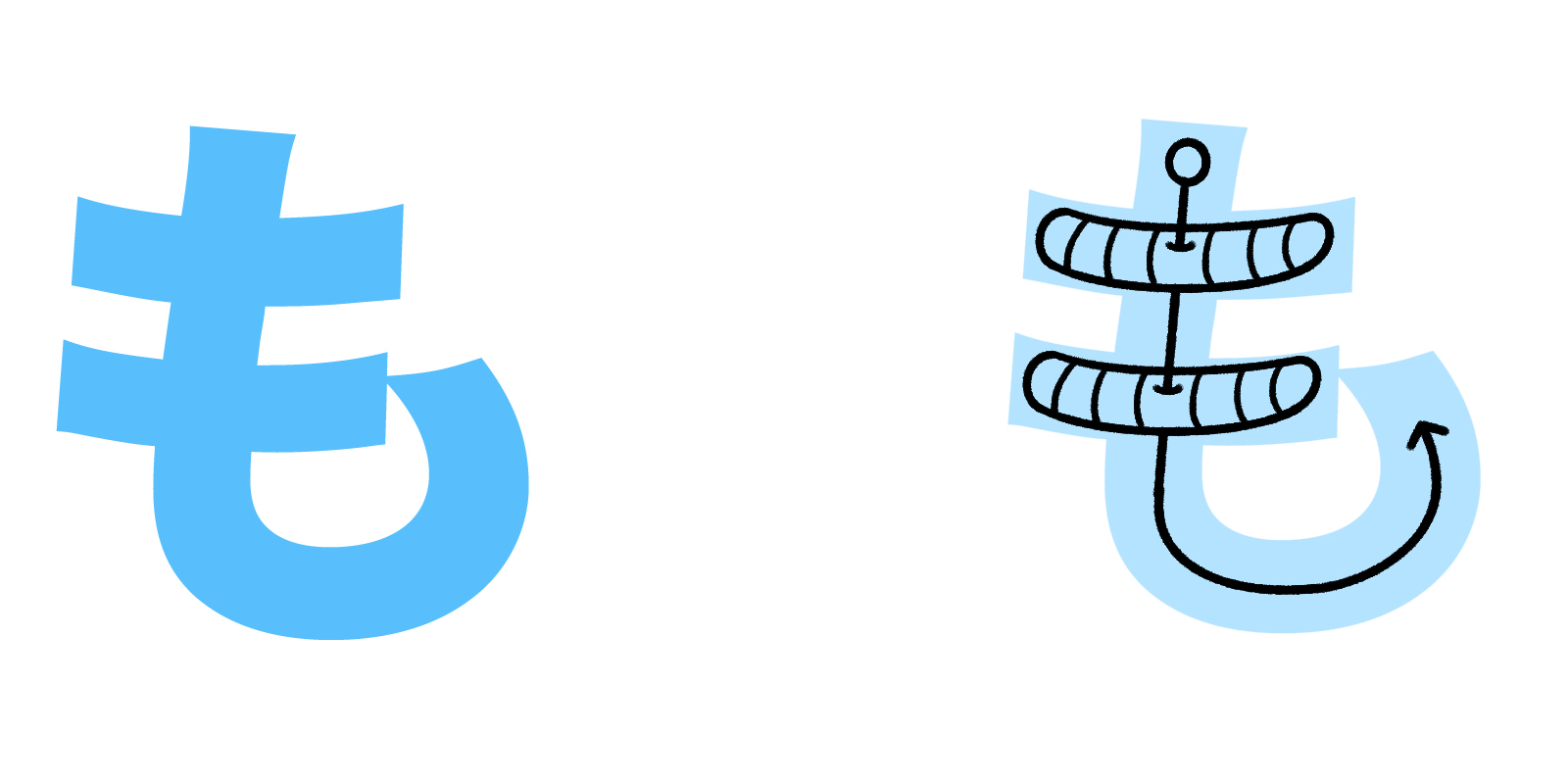
M before お gives も. Like the “mo” in more. Last of the row — thirty-five characters.
Something to drink
A drink. The heading on half the menus you will meet.
The row together
Pair them up.
Read them cold
No options.
All thirty-five
Twice each. The only place they all meet.
Words
Every one unique.
Spell every word
Worth knowing
なまえ — name. You will be asked for it at hotels, clinics and ticket counters, usually as おなまえは… — with the は you met last lesson, said “wa”.
のみもの is worth pulling apart: のむ is “to drink”, and もの is “thing”. A drink is a drink-thing. Japanese builds a lot of vocabulary this way, and you can now read both halves.
Thirty-five down, eleven to go. What is left is two short rows — や ゆ よ and わ を ん — and the five of ら.